

AYUC-IDEI:Protection of journalists: An international judge presents international legal instruments

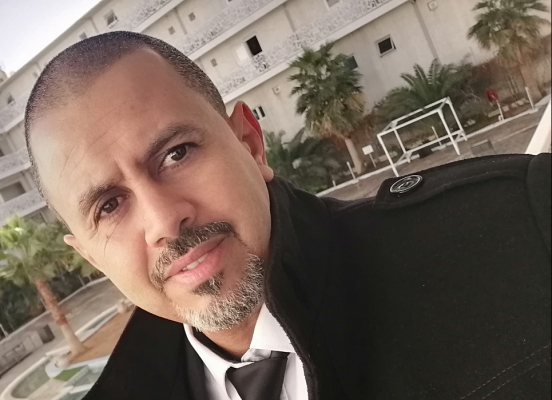
Every year, journalists are killed, imprisoned or threatened for doing their work. The 10th International Day to End Impunity for Crimes against Journalists is an opportunity to denounce these acts and demand justice for the victims. We are delighted to welcome HIS EXCELLENCE Council today. Hamzaoui Mustapha, International Judge at the Court of England and Secretary General of AYUC/Algeria, who will share with us his expertise on international legal instruments that protect journalists and press freedom.
Reading..............
Africa News Room: have the protection of journalists and press freedom evolved over the years?
EXC.Hamzaoui Moustapha:First of all, allow me Mr. AGBEGNIGAN, on this important occasion, to pay a sincere and profound tribute to the front-line journalists and reporters who, with remarkable courage, engage in the field to cover conflicts, crises andemergency situations. It is also essential to emphasize that this commemorative date is an opportunity to remember the qualities of the women and men of the Algerian media, who have been at the forefront, with their judicious writing and their enlightening ideas. They thus give an example of professionalism, sacrifice and struggle, aiming to raise the voice of Algerians and Algeria loudly, while defending the justice of their cause in the face of the injustice of the colonizer.
This day, celebrated this year, takes place in a particularly tragic and worrying context, marked by the assassination of 26 Palestinian journalists in Gaza in just 27 days. These painful events highlight not only the dangers faced by journalists in conflict zones, but also the urgency of protecting those who are committed to reporting the truth, even at the risk of their lives.
Although the topic is of great importance, I will be abbreviated in my answers. I undertake to return to the subject in more detail on our future occasions.
The protection of journalists and freedom of the press have evolved in complex ways, with significant advances and worrying setbacks. In the 20th century, the recognition of human rights, notably through the Universal Declaration of 1948, established a framework for press freedom. Many countries have enshrined this freedom in their constitutions, but protections vary. Conflict and authoritarian regimes continue to threaten journalists, who are often targeted for reporting inconvenient truths. The advent of the Internet has transformed the media landscape, but also introduced challenges like misinformation. International organizations work to protect journalists, although impunity for crimes committed against them remains a problem. Today, journalists face varied threats, and the rise of populism reinforces tensions around press freedom. Despite progress, continued vigilance is necessary to ensure the safety of journalists and freedom of expression.
Africa News Room:What are the main milestones in the history of the protection of journalists and press freedom?
EXC.Hamzaoui Moustapha:Among the main milestones in the history of the protection of journalists and freedom of the press, we can cite the Universal Declaration of Human Rights of 1948, which affirms the right to freedom of expression, fundamental for press freedom. Starting in the 20th century, many countries have enshrined press freedom in their constitutions, providing a legal framework to protect journalists. The creation of Reporters Without Borders in 1985 was also a turning point, defending press freedom and raising awareness of violations of journalists' rights. UN Security Council Resolution 1738 in 2006 condemned attacks on journalists in conflict situations. Additionally, the Windhoek Declaration in 1991 highlighted the importance of independent journalism for democratic development. UNESCO's initiatives on the safety of journalists and the declaration of November 2 as the International Day to End Impunity for Crimes against Journalists are important steps in this fight. Finally, the emergence of digital media and recent campaigns against impunity show that, despite notable progress, the protection of journalists and press freedom remain crucial issues that require constant vigilance and commitment.
Africa News Room:How have international legal instruments been put in place to protect journalists?
EXC.Hamzaoui Moustapha:International legal instruments to protect journalists have been established through several key mechanisms. The Universal Declaration of Human Rights (1948) affirms the right to freedom of expression, while the International Covenant on Civil and Political Rights (1966) and the European Convention on Human Rights (1950) reinforce these protections at the legal level. UN resolutions, such as Resolution 1738, condemn attacks against journalists in conflict situations. UNESCO also developed guidelines for their safety, and the Windhoek Declaration promoted independent journalism in Africa. Finally, monitoring mechanisms make it possible to monitor violations of journalists' rights and encourage States to respect their commitments. Although these instruments provide an essential framework, their effective implementation is crucial to guarantee the safety of journalists.
Africa News Room:What are the main rights of journalists under international law?
EXC.Hamzaoui Moustapha:Journalists have several fundamental rights under international law, essential to the exercise of their profession. Among these rights, we find:
Right to freedom of expression: Guaranteeing the possibility of seeking, receiving and disseminating information.
Right to access information: Allowing journalists to access public information for their work.
Protection from censorship: Ensuring that they are not subject to prior interference in their reporting.
Right to source protection: Preserving the confidentiality of information sources.
Protection against violence and threats: Guaranteeing their security, particularly in conflict zones.
Right to a fair trial: Ensuring fair procedures in the event of disputes.
Right to freedom of assembly and association: Allowing them to organize to defend their professional interests.
Right to copyright protection: Protecting their creations from unauthorized use.
These rights are crucial for press freedom and democratic functioning, but their effective implementation remains a challenge in many contexts.
Africa News Room:How are the rights of journalists protected by international conventions such as the International Convention on Civil and Political Rights (ICCPR) and the European Convention on Human Rights (ECHR)?
EXC.Hamzaoui Moustapha:The rights of journalists are protected by international conventions such as the International Convention on Civil and Political Rights (ICCPR) and the European Convention on Human Rights (ECHR) in the following manner:
CIDCP
Article 19: Guarantees freedom of expression, including the right of journalists to seek, receive and disseminate information without interference.
Protection from censorship: Any restrictions on freedom of expression must be legal and necessary, allowing for challenges to restrictive laws.
Right to a fair trial: Provides journalists with judicial protection in the event of prosecution.
ECHR
Article 10: Protects freedom of expression and recognizes the essential role of journalists in democracy.
Case law: The European Court of Human Rights has handed down decisions favorable to journalists, condemning attacks on their freedom to work.
Protection of the source: Although not explicitly mentioned, case law has recognized the importance of protecting sources to guarantee freedom of investigation.
In summary, these conventions provide a crucial legal framework for the protection of journalists, but their implementation depends on the commitment of states to respect these standards.
Africa News Room:What are the mechanisms for implementing these rights?
EXC.Hamzaoui Moustapha:The mechanisms for implementing the rights of journalists, as defined by international conventions such as the ICCPR and the ECHR, include:
Monitoring and reporting mechanisms
Monitoring committees: Such as the UN Human Rights Committee, which examines state reports and makes recommendations.
NGO Reports: Organizations and agencies regularly publish reports on the situation of journalists, drawing attention to violations.
Complaint procedures
Individual complaints: Journalists can file complaints with the European Court of Human Rights for violations of their freedom of expression.
Petition Mechanisms: The ICCPR also allows individual petitions regarding violations, although this is less common.
Awareness and training
Training for journalists: Training programs help journalists understand their rights and ensure their safety.
Awareness campaigns: Leads to raising public and government awareness of the importance of press freedom.
Legal support
Legal assistance: Provided by human rights organizations to help journalists challenge abuses.
Intergovernmental collaboration
Dialogue between States: Allows issues of press freedom to be addressed and best practices to be exchanged.
Resolutions and declarations: Encourage States to improve the protection of journalists.
These mechanisms are essential to guarantee respect for the rights of journalists, but their effectiveness depends on the political will of States and the commitment of civil society actors.
Africa News Room:What are the main challenges in fighting impunity for crimes against journalists?
EXC.Hamzaoui Moustapha:Fighting against impunity for crimes against journalists presents several major challenges:
Culture of impunity
Many countries suffer from a culture where crimes against journalists are not treated seriously, inciting violence.
Weak judicial systems
Ineffective or corrupt justice systems can lead to botched investigations and failure to prosecute.
Security threats
Journalists often face physical threats and intimidation, which can deter them from investigating sensitive topics.
Political and economic pressures
Governments exert pressure to control information, leading to self-censorship and violations of journalists' rights.
Limited access to information
Journalists face obstacles in obtaining information, particularly in authoritarian regimes.
Lack of international support
Concrete support to combat impunity is often limited, reducing pressure on governments to respect journalists' rights.
Disinformation and attacks on the media
The rise of disinformation and anti-media rhetoric creates a hostile environment, putting journalists at greater risk.
These challenges require a comprehensive approach to strengthen the protection of journalists and ensure that those responsible for violence are held to account.
Africa News Room:How can governments and international organizations work together to end impunity?
EXC.Hamzaoui Moustapha:To end impunity for crimes against journalists, governments and international organizations can collaborate in several ways:
Strengthening legal frameworks
Develop and strengthen laws protecting journalists, with the support of international organizations.
Training and awareness
Initiate training programs for law enforcement and raise public awareness of the importance of press freedom.
Monitoring and reporting mechanisms
Establish systems for monitoring violations and produce joint reports on the situation of journalists.
Investigation Support
Provide technical assistance for investigations and mobilize resources to support prosecutions.
Diplomatic pressure
Use international forums to advocate for the protection of journalists and impose targeted sanctions for serious violations.
Building coalitions
Form multi-stakeholder partnerships to work on joint initiatives to secure journalists.
Promoting best practices
Promote the exchange of experiences on protection and security strategies for journalists.
This collaboration is essential to establish a safe environment for journalists and ensure that crimes against them do not go unpunished.
Africa News Room:What are the examples of success in the fight against impunity for crimes against journalists?
EXC.Hamzaoui Moustapha:Here are some examples of successes in the fight against impunity for crimes against journalists:
Successful investigations and prosecutions
Cases like the murder of journalist Dmitry Kholodov in Russia show that investigations can lead to convictions, even years later.
Protection initiatives by NGOs
-Reporters Without Borders launched campaigns such as “Journalists in Danger,” raising public awareness and leading to increased protection measures.
National mechanisms
Mexico has created commissions of inquiry to address crimes against journalists, leading to more rigorous investigations.
Support from the international community
UN resolutions on the safety of journalists have reinforced governments' commitments to protect them.
Protection programs
-Countries like Italy and Colombia have established protection programs for journalists under threat, providing security and support.
Political commitments
World leaders, such as Emmanuel Macron, have publicly supported actions to protect journalists and guarantee press freedom.
Legislative support
Laws, like the one adopted in India in 2017, aim to strengthen the safety of journalists and punish violence against them.
These successes illustrate that, despite the challenges, significant progress has been made in the fight against impunity for crimes against journalists through collaboration between various actors.
Africa News Room:What is the role of international organizations such as the UN, EU and IACHR in promoting press freedom and protecting journalists?
EXC.Hamzaoui Moustapha:International lawyers face several challenges in promoting press freedom:
Evolution of technologies
-Digital surveillance and online censorship make it difficult to protect journalists and their sources.
Growing political pressures
Authoritarian regimes may impose additional restrictions on press freedom, undermining the protection of journalists.
Disinformation and fake news
Combating disinformation complicates the work of journalists and can be used by governments to justify restrictions.
Persistent impunity
Weak accountability and corruption in justice systems hamper the investigation and prosecution of crimes against journalists.
Coordination difficulties
International cooperation is complicated by varied legal systems, making alignment of priorities difficult.
Limited financial support
Press freedom organizations may suffer from budgetary constraints, limiting their capacity for action.
Awareness and training
The need to train judicial actors and raise public awareness remains a major challenge for promoting press freedom.
These challenges require innovative strategies and close collaboration among diverse actors to advance the protection of press freedom.
Africa News Room: How can these organizations contribute to the implementation of international legal instruments to protect journalists?
EXC.Hamzaoui Moustapha:International organizations such as the UN, the European Union (EU) and the Inter-American Commission on Human Rights (IACHR) can contribute to the implementation of international legal instruments to protect journalists from several ways:
Development of standards and recommendations
Promote specific international standards and issue recommendations to States to align their legislation with international standards.
Monitoring and evaluation
Establish mechanisms for monitoring violations and assess the impact of laws and policies on the protection of journalists.
Training and capacity building
Organize training for law enforcement and lawyers on the rights of journalists and strengthen institutional capacities.
Technical and financial assistance
Provide technical and financial support to States to implement journalist protection programs and fund collaborative projects.
Advocacy and awareness
Pressuring governments to respect their international commitments and conducting awareness campaigns on the importance of press freedom.
Complaint and access to justice mechanisms
Facilitate access to complaint mechanisms for journalists who are victims of violations and provide legal support.
In short, these organizations play a crucial role in creating a safer environment that respects press freedom.
Africa News Room:What are the challenges these organizations face in promoting press freedom?
EXC.Hamzaoui Moustapha:International organizations such as the UN, the European Union (EU) and the Inter-American Commission on Human Rights (IACHR) face several challenges in promoting press freedom:
National sovereignty
States can refuse external interventions, invoking sovereignty to justify restrictions on press freedom.
Corruption and lack of political will
Corruption and a lack of political will in some countries hamper the application of laws protecting journalists.
Violence and intimidation
Journalists often face threats and violence, making their work dangerous and difficult.
Hostile environments
In authoritarian contexts, governments may react negatively to the efforts of international organizations.
Disinformation and hate speech
The rise of disinformation and anti-media discourse complicates the perception of the work of journalists and fuels a climate of hostility.
Limited resources
Budgetary constraints and limited resources can restrict missions to promote press freedom.
Coordination between actors
The need to coordinate efforts between different actors can pose challenges in aligning priorities.
Impact of technologies
Rapidly evolving technologies, such as digital surveillance, pose new challenges for the protection of journalists.
These challenges require a collaborative and strategic approach to effectively promote press freedom and protect journalists.
Africa News Room:What progress has been made in the fight against impunity for crimes against journalists in recent years?
EXC.Hamzaoui Moustapha:In recent years, significant progress has been made in the fight against impunity for crimes against journalists:
Increase in legal proceedings
More cases of violence against journalists have been brought to justice in several countries.
Creation of national mechanisms
-Special commissions and units have been established to investigate crimes against journalists, as in Mexico.
Increased international support
The UN and EU are putting increasing pressure on states to take concrete measures against impunity.
Increased awareness
Campaigns by NGOs have mobilized public opinion in favor of journalists who are victims of violence.
Use of technologies
Social media and digital technologies have made it possible to document and make visible violations of journalists' rights.
Training and capacity building
Training programs for law enforcement and judicial personnel have been put in place to improve the protection of journalists.
Adoption of protective laws
Specific laws aimed at protecting journalists have been adopted or strengthened in some countries.
Mobilization of the international community
Initiatives like the International Day to End Impunity for Crimes against Journalists have strengthened global efforts to promote their safety.
These advances demonstrate growing awareness and concrete actions to combat impunity, requiring continued collaboration between various actors.
Africa News Room:What are your recommendations for governments, international organizations and human rights organizations to combat impunity for crimes against journalists?
EXC.Hamzaoui Moustapha:Here is a summary of the recommendations to fight impunity for crimes against journalists:
Strengthen legal frameworks
Adopt specific laws to protect journalists and define severe sanctions.
Harmonize legislation with international standards.
Improve investigation mechanisms
Create specialized units to investigate crimes against journalists.
Promote the independence of investigations to avoid political interference.
Promote training and awareness
Train law enforcement and judicial personnel on the rights of journalists.
Raise public awareness of the importance of protecting journalists.
Strengthen international support
Collaborate with international organizations to obtain technical and financial support.
Support international resolutions condemning violence against journalists.
Ensuring the protection of journalists
Establish protection programs for journalists under threat.
Create anonymous reporting channels for victims of threats or violence.
Encourage accountability and transparency
Monitor and report violations of journalists’ rights.
Demand public investigations into cases of violence.
Promoting regional cooperation
Establish regional networks to share good practices.
Participate in international forums on the safety of journalists.
By following these recommendations, the different actors can contribute effectively to the
protection of journalists and the fight against impunity.
THE CASE OF ALGERIA.
Since its proclamation in 1993 by the United Nations General Assembly, May 3 is celebrated every year around the world, to recall the fundamental principles of media freedom and the need for their independence, to guarantee their role as megaphone, for the voiceless.
This year, Algeria, which believes in the noble principles of press freedom, is celebrating this day in a particular context, since the information sector is affected by a profound reform. Indeed, the new Organic Law on Information illustrates the desire of the President of the Republic to make freedom of the press an “immutable principle”, as enshrined in the Constitution of November 2020.
~In Algeria, this Day takes on particular importance, as the country strives to strengthen freedom of expression, and ensure a conducive environment for independent journalism.
Algeria has made significant progress in promoting press freedom. Over the years, Algeria has made significant progress in promoting press freedom. Legislative and institutional reforms have been undertaken to protect journalists and guarantee their right to freedom of expression. Journalists and media professionals in Algeria continue to play an essential role in society, providing impartial information. Their work, and their commitment to the truth, is essential to maintaining transparency and accountability in governance. This is why, on this World Day, it is crucial to recognize the efforts made by Algeria to promote a free and open media environment. Freedom of the press is a fundamental pillar of any democratic society and must be protected and defended without compromise.
In closing, I hope I have been clear in my answers. I thank you once again, Mr. AGBEGNIGAN, for this important debate which reflects your professionalism. See you soon for other current topics.
International related_news